We can no longer trust what we see.
8 min read · 1,503 words
Intro
Unbeknownst to the general public, AI image generation has made leaps and bounds in recent months. With the release of Google's Nano Banana Pro, the power to create realistic images is in the hands of the masses.
Take a look at this image:
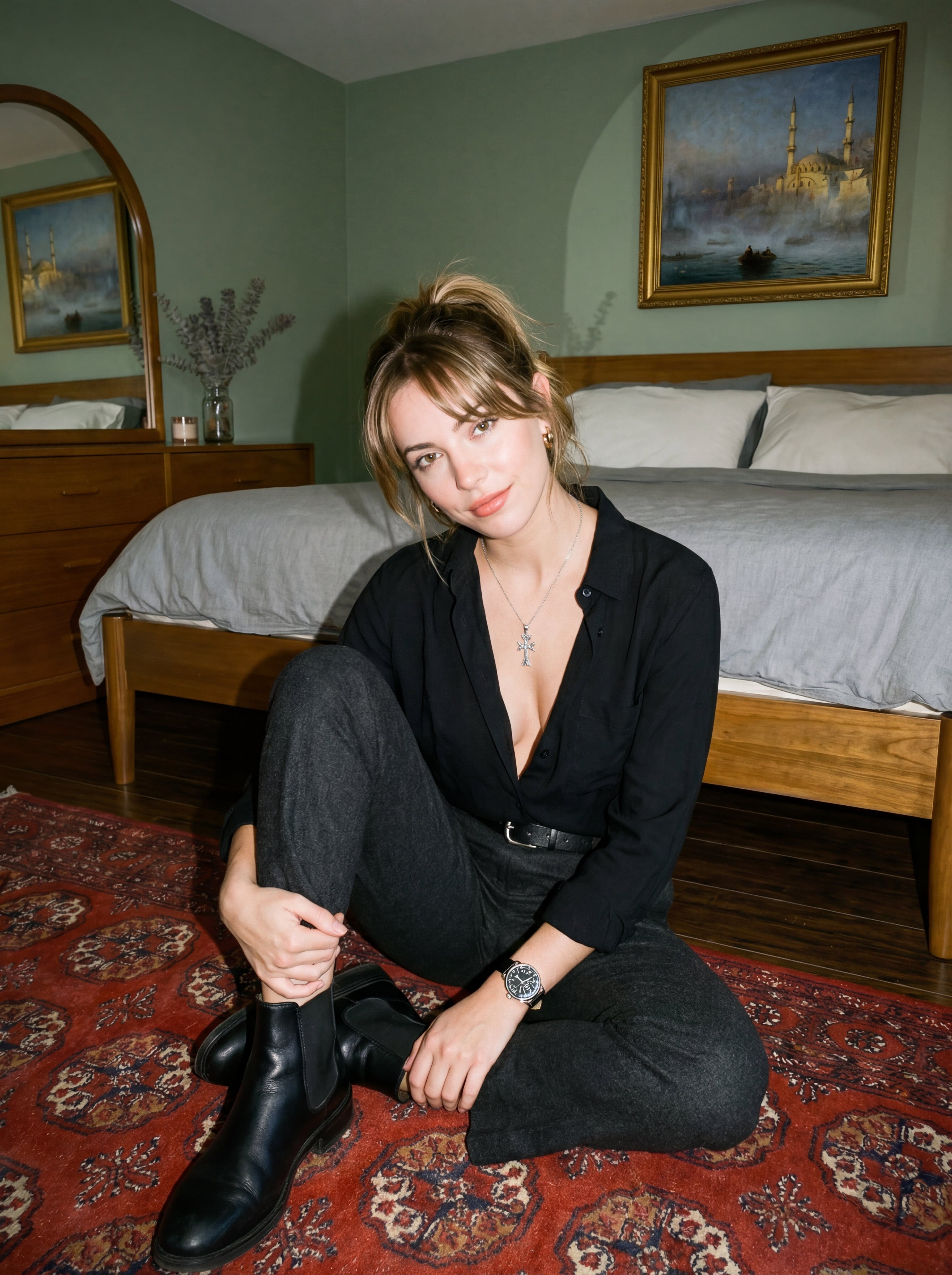
It was generated with AI. The person isn't real, the bedroom isn't real, the carpet isn't real, and those plants by the mirror definitely aren't real. These images as well are AI-generated:
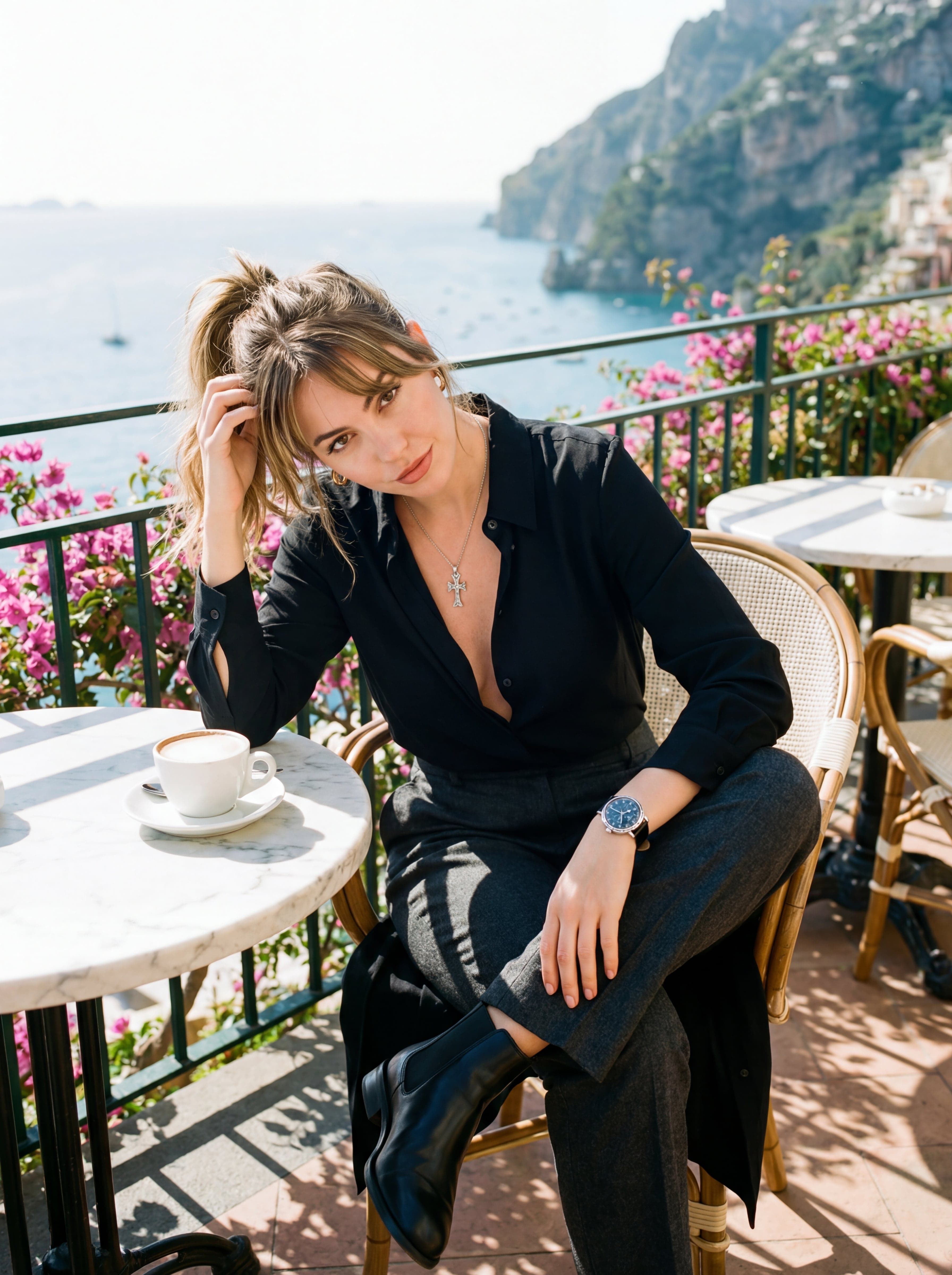
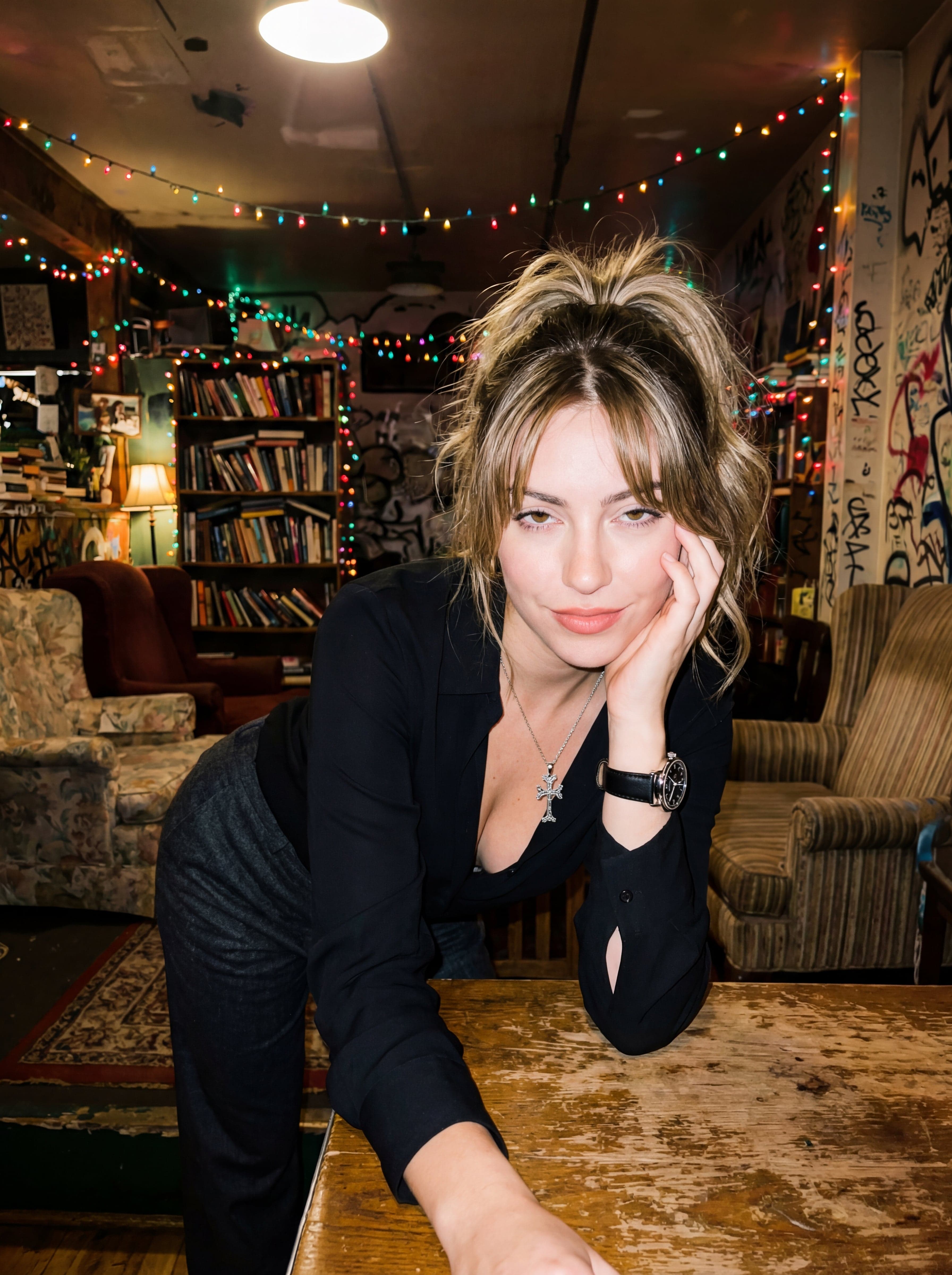
As well as these:
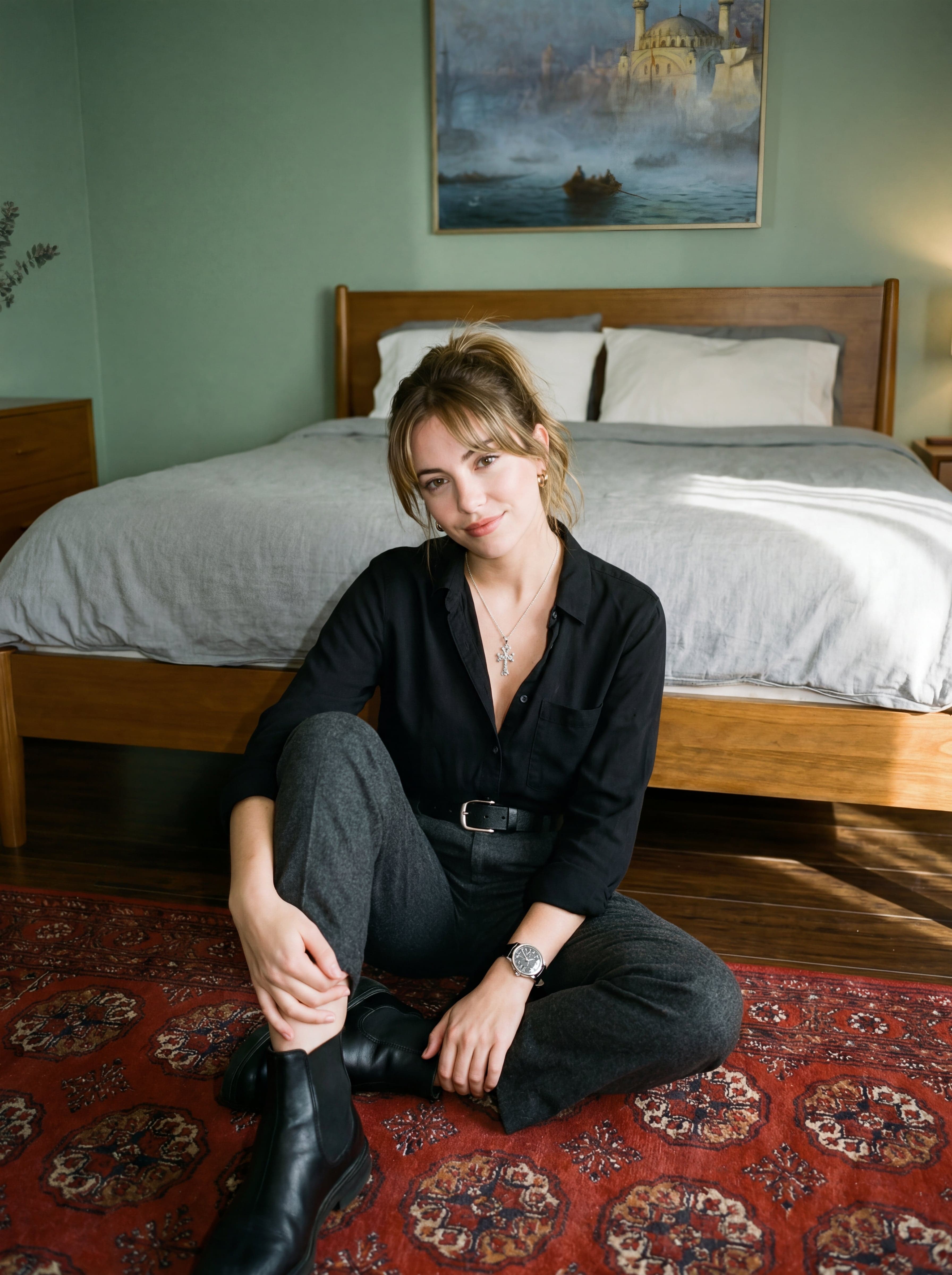
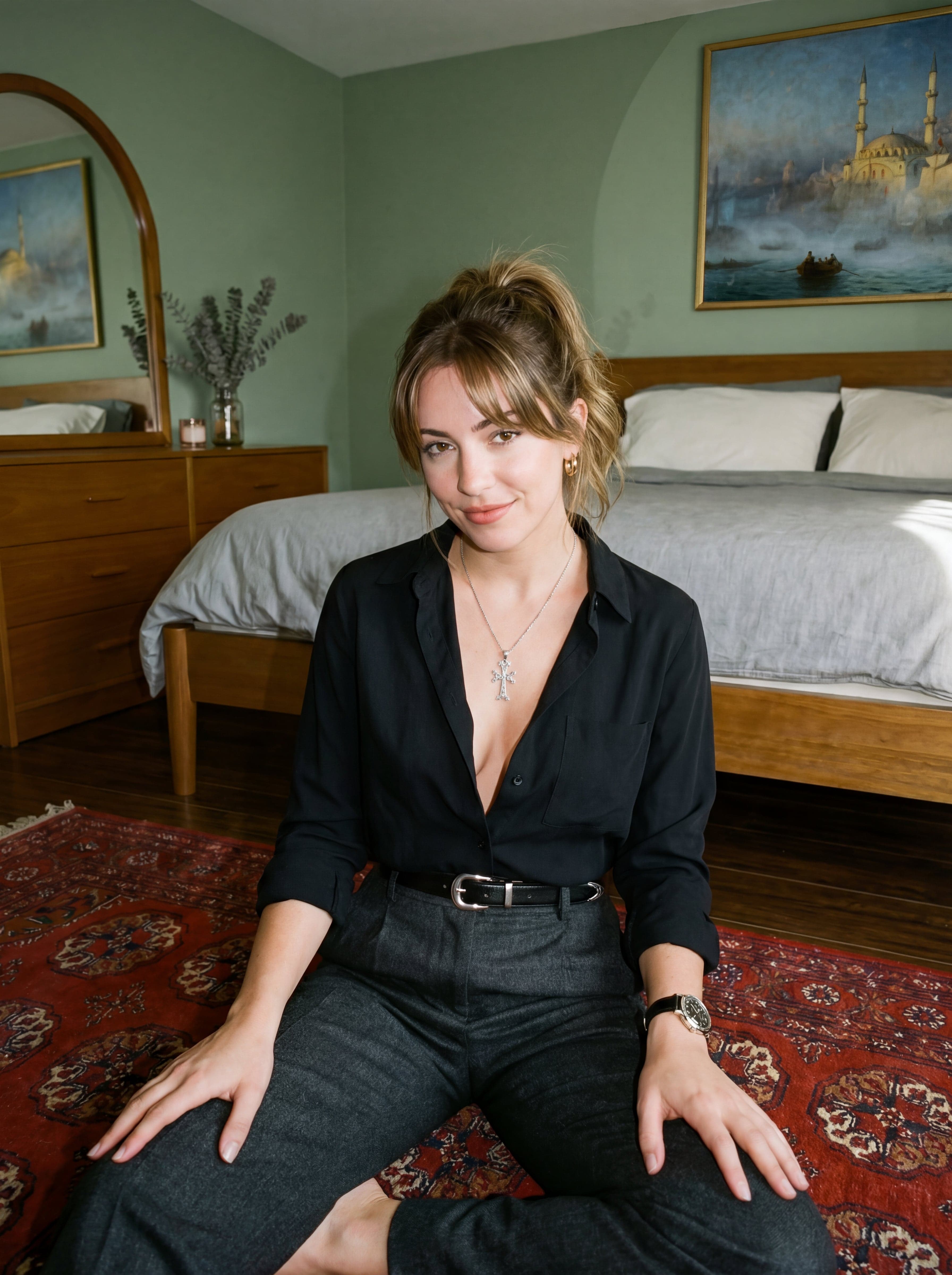
It is honestly terrifying how good these AI image generation softwares have gotten. In lots of cases, it's past the point where one can tell when an image has been artificially generated. The tells aren't there anymore. People have five fingers, pupils aren't messed up, and faces in the background look coherent. Google has the largest repertoire of images known to man at their disposal, and they have been relentless about creating the best image generation model. They're light-years ahead of the competition.
Those of you who have worked with these models before may have noticed something about the images I presented. They are consistent. The faces, the backgrounds, the wardrobes, they don't change between generations. I will get to how I accomplished this later in the article. I first want to go over the implications of this technology.
The Implications
Being able to consistently generate images like this leads to three different worrying scenarios—fake people, fake pornography, and the death of evidence.
Fake People
Very easily I could generate a pretty woman, dress her up in indie or goth or alt or whatever clothing, and start posting on social media pretending to be said person. Farming interactions, creating fake bonds with people, gaining the trust of others. Back in the day the mantra was "don't trust strangers you meet online", but with modern social media and the constant sharing of our faces and beings we felt that that was a rule we could now forgo. No longer is that true. Your new friend or Hinge match could very well be some random with access to this technology, posing as someone else for whatever ulterior motives they may have.
Fake pornography
This already existed in the form of AI-generated porn before, but using facial references and image editing, it is now trivial to say, remove the clothing of an image of a random woman, or perhaps, douse said image in "glue and milk". You could take someone's face, generate them performing sexual intercourse, and use it to blackmail them.
This is already happening on Twitter, with lawsuits having been filed against the company for these "deepfakes".
The death of evidence
This is the scariest one. Using facial references, one could perhaps, kill someone, then frame Joe Schmoe by generating images of them committing the act. One could generate Joe Schmoe robbing a store, one could generate Joe Schmoe raping someone.
In a more real example, one could've replaced the United Healthcare assassin's face with detailed images of Luigi Mangione to attempt to further frame him.
In the court of law, photographic and video evidence reigned supreme. Photos could prove or disprove almost anything. Not anymore. With the advent of AI image generation, anyone can become a criminal.
How AI image generation works, a short form
If you read my article about AI and Consciousness, you may remember the section on what is AI. AI image generation works differently than the AI models I talked about in that article. AI image generation uses a process called "diffusion".
The diffusion process
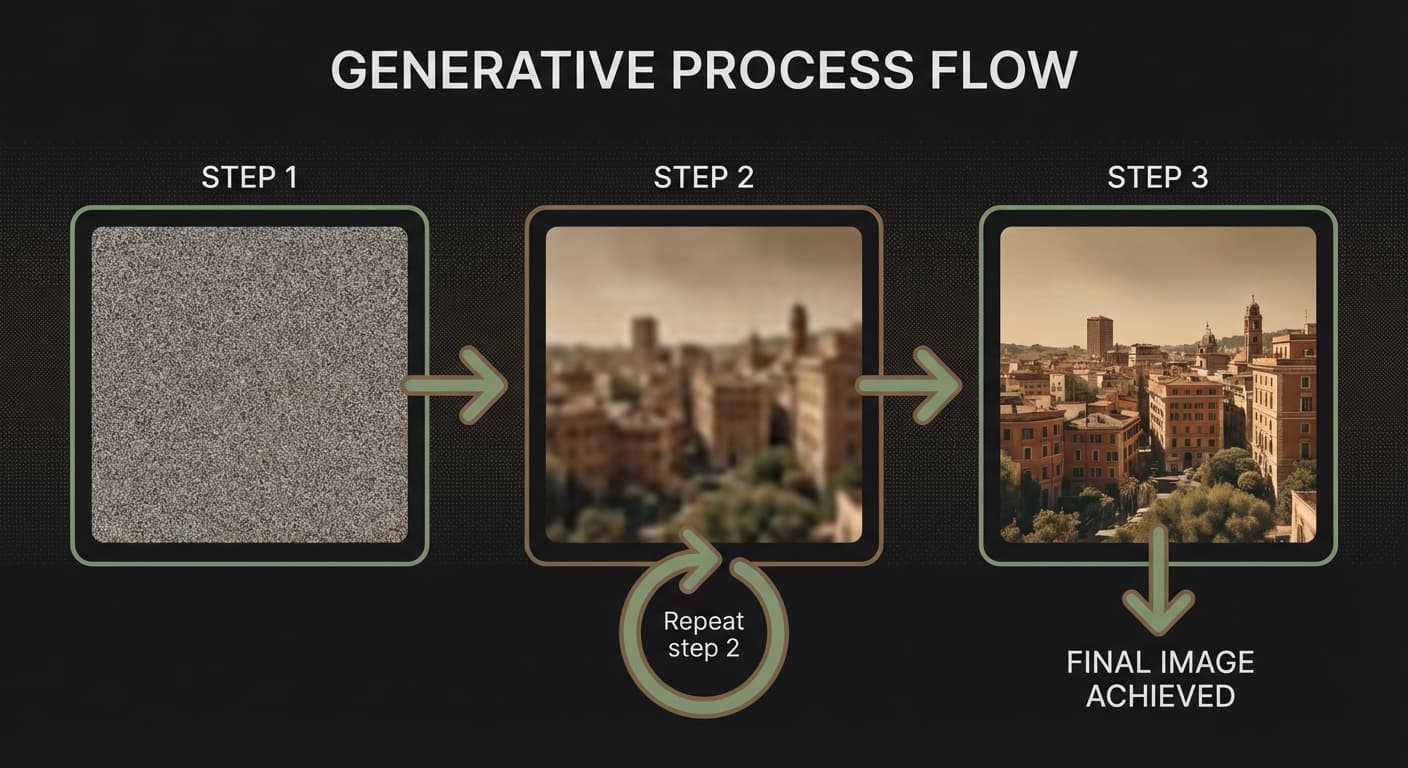
Step 1. Generate some random noise (think, TV static)
Step 2. Schizophrenically try to find patterns within the random noise (also called denoising, the term which I will be using to refer to this step from now on)
Step 3. Repeat step 2 until you have an image
Granted, the underlying math and processes here are much more complex than this, but that is a general overview of how diffusion models (current AI image generation) works.
Sure, but when I tell it to, say, generate me an image of three cats eating sushi, or a brunette woman sitting down, how does the model know to generate that?
Prompting AI image generation: The meta
When creating an image using AI, the standard has been something like this:
female, white, brunette, ((chopped bangs)), messy ponytail, (white dress shirt), black pants, chelsea boots, sittingThat is a basic prompt that, as you may guess, would generate a white brunette woman with chopped bangs and a messy ponytail, wearing a white dress shirt, black pants, chelsea boots, and sitting down. Prompting software for AI image generation did not (and arguably still does not) understand natural prose, so booru tags like these are necessary to make images1 . These are, as shown above, short, choppy descriptors of an image.
ChatGPT even does something similar (allegedly), where it will turn your natural-language text into booru tags for the model to then use.
However, with the advent of Google's Nano Banana model, things changed. People discovered you could use JSON to prompt it, and it worked way better than booru tags.
JSON is a data model used in programming. It is one of the standard ways of storing data, as it is one of the most versatile ways to handle structured data. That booru-tagged prompt above would look like this in JSON:
{
	"subject": {
		"gender": "female",
		"skin_color": "white",
		"hair": {
			"color": "brunette",
			"hairstyle": "chopped bangs, messy ponytail"
		},
		"wardrobe": {
			"shirt": "white dress shirt",
			"pants": "black pants",
			"shoes": "black chelsea boots"
		},
		"pose": "sitting"
	}
}
Tons more text, way different structure, but somehow in the end a way better result.2
ImageGen
It is a very well-known fact amongst anyone who has ever worked with me that I cannot fucking name things for the life of me. I fear for the day my future wife asks for my help naming our kids.
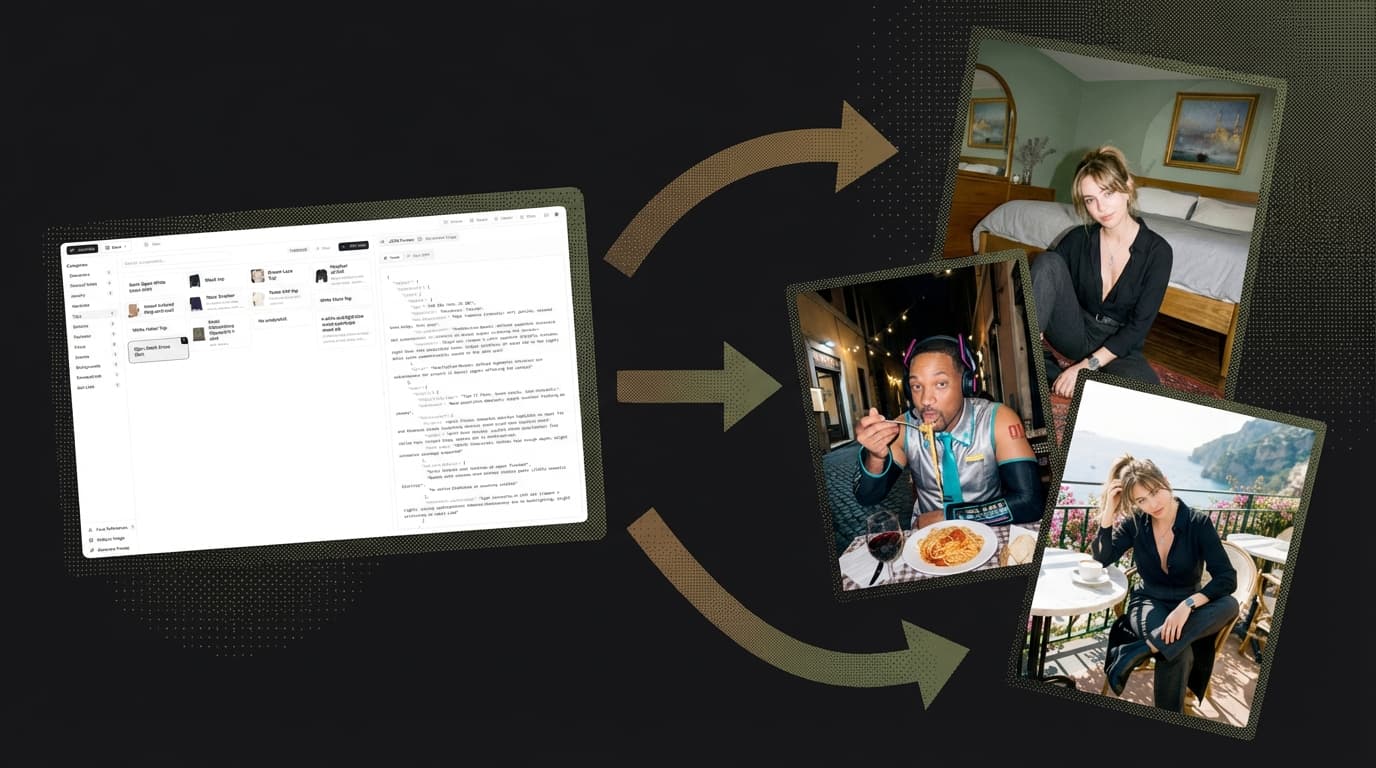
ImageGen is a side project I had made for fun in a weekend. I thought, since we can use JSON to generate images, and since JSON components can easily be swapped-out, what is stopping one from creating a hot-swappable image generator?
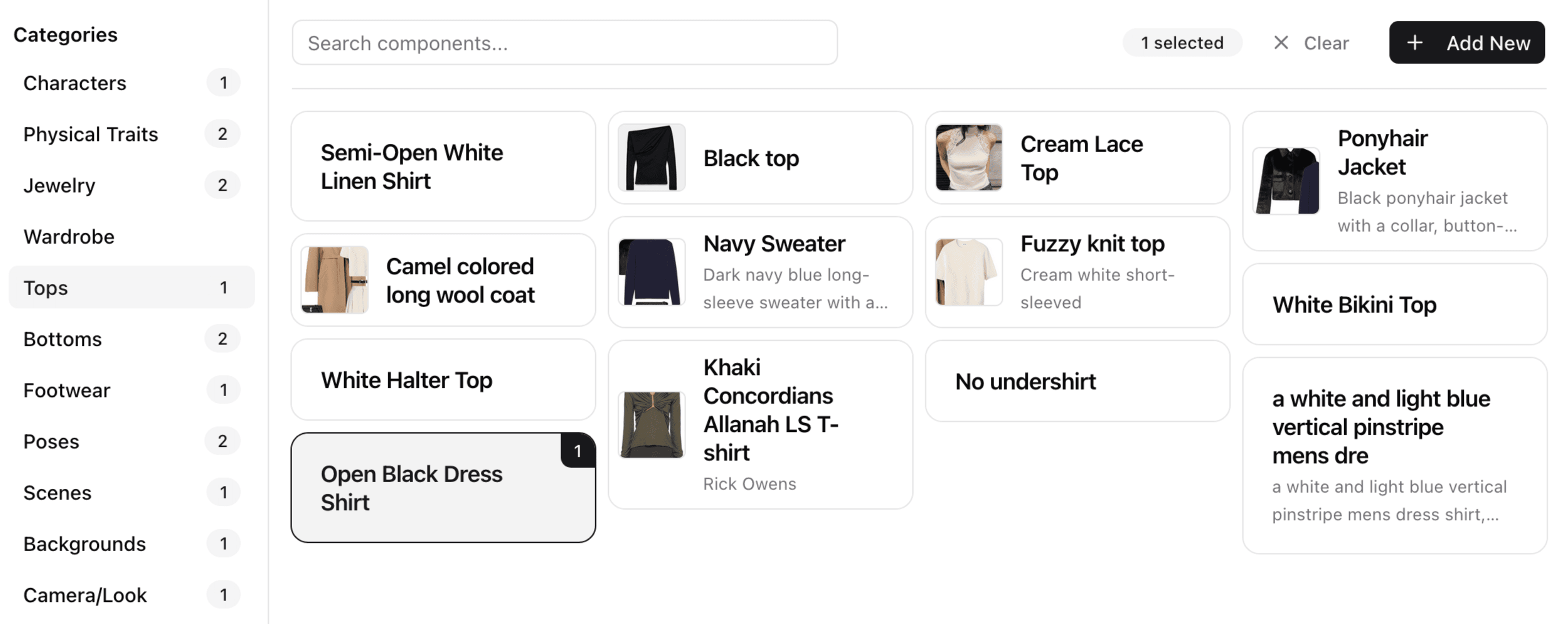
I figured that using a set of user-definable components, one would be able to do exactly this. Swap out wardrobes, cameras, scenes, and characters all with the click of a button.
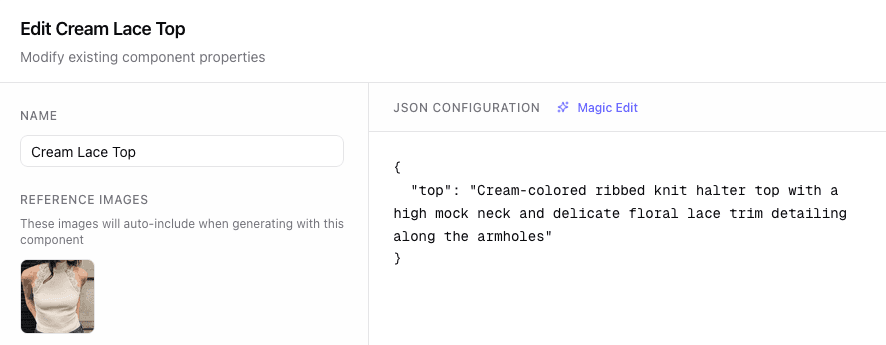
I realized that even with detailed descriptions, components were still not generating 100% consistently. Faces would look a bit different, clothes weren't just the same, and room layouts constantly changed. I introduced image references which get thrown into the prompt, and with that, consistency shot up.3
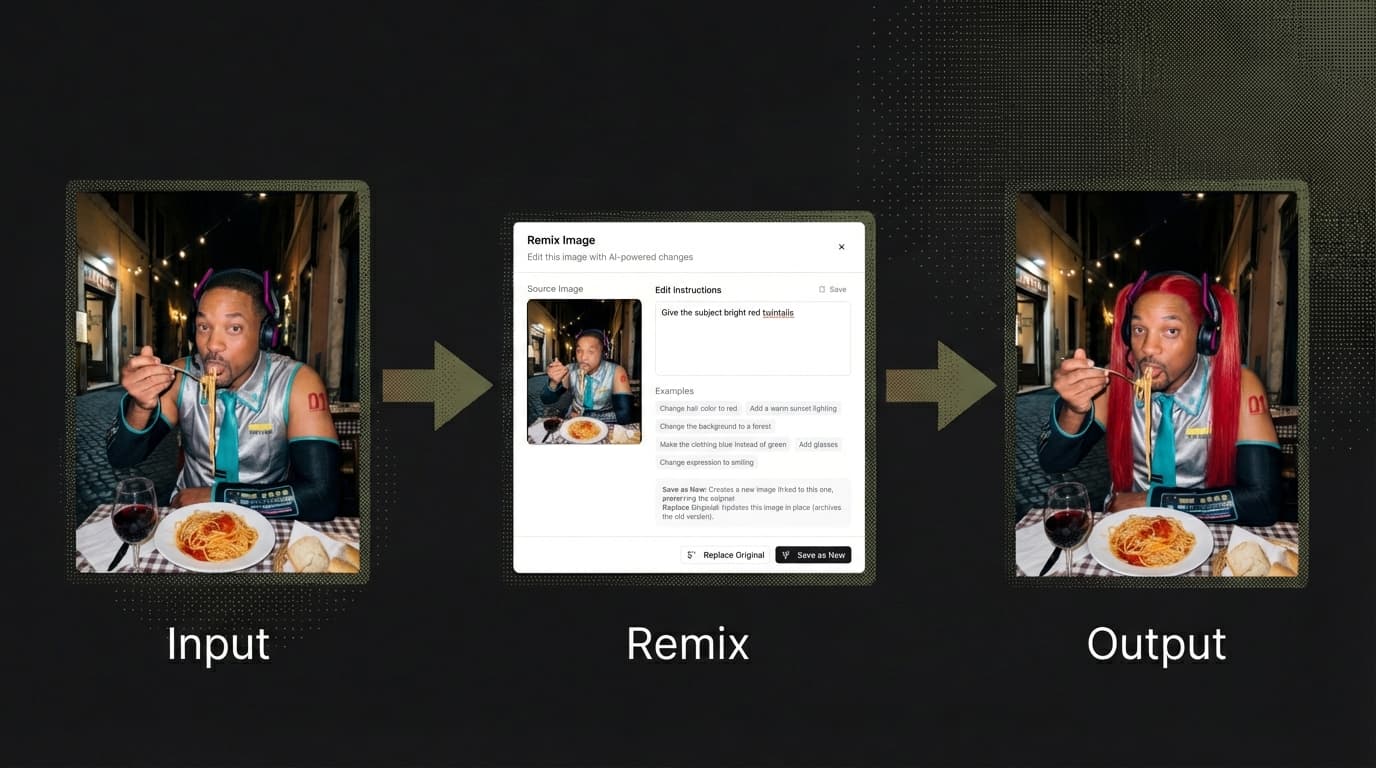
It's trivial to edit images as well. Shown above is the remix flow, where one can, in plain English, modify anything about a photo. Like the above example, where I give Will Smith dressed as Hatsune Miku eating spaghetti red twintails akin to Teto's.
All of the code to create ImageGen was written with AI4 , and the core of the thing was built in the span of three days. Three days. Zero code ever touched by human hands. Granted, I have the architectural skills needed to make something like this, but it really boils down to nothing more than thinking hard for a bit and mapping it out on some paper. Any random person off the streets can do this.
Conclusion
For a while I was grappling between "do I write this as a fear-mongering piece focused on the unaware general public" and "do I write this as a cool technical implementation piece aimed at fellow tech people". I had gone around and shown what I had built to people of both camps, and while tech people thought it was a cool little gimmick, the non-tech people were horrified at the results. They would take my phone and show it to everyone around, exclaiming "THIS IS AI!!" in their disbelief.
Obviously, me being me, I can't write a non-technical article without introducing some technical explanations. But I do feel that this technology is extremely worrying. In the hands of the wrong people—and it will get into their hands—this technology will usher in a new dark age.
I do want to say, it is a common misconception that these technologies were created for the purposes of the aforementioned implications. That is not the case. What this really is, is a pissing match between nerds, seeing who can generate the most life-like images. That's it. That's all there is to it. Unfortunate as it is, not everything comes with some deeper ulterior motive.
Every single image and chart in the article was generated using Nano Banana. As a creative, this definitely pained me to do, but I did it to prove a point. That AI image generation can even produce half-viable charts. The technology is still in its relative infancy. During the writing of this article, Qwen (a major player in the Chinese AI space) released qwen-image-2.0 which can generate good charts (and honestly pretty fucking incredible text).
The largest of these being rule34.xxx, a porn website. Most of these boorus are porn websites. Granted, through porn comes lots of innovation (internet video streaming, robust data tagging systems)
Depending on your interpretation
Still not 100%, but much better than before
Calling it "vibe-coding" does some disservice to the underlying engineering and architecture decisions that went into creating the application, but 100% of the code in ImageGen is AI-generated as a part of an experiment on Claude Code usage.